

Hiring in the Philippines
Thanks to its high-quality education system, the strong work ethic of its people, and its growing tech and creative sectors, the Philippines is a popular country for hiring, especially for highly skilled workers. However, it’s important to under its laws and business customs.
Employment relationships in the Philippines are governed by such laws as the Labor Code of the Philippines, various statutes, and judicial precedents, as well as collective and individual contracts. The labor code encompasses numerous regulations established by the Department of Labor and Employment (DOLE) and other relevant agencies.
Additionally, Philippine law regulates the use of contractual workers through provisions in the Labor Code and related statutes. Employers are required to adhere to regulations regarding the hiring of contractual employees, ensuring compliance with labor standards and providing necessary benefits.
Because of the complexity of employment laws in the Philippines, compliant employment contracts are an essential business need. With Safeguard Global as your partner, you can employ workers in the Philippines with confidence, knowing that every contract for every worker meets all requirements. We can also provide you with guidance about cultural norms and hiring best practices, and keep you up-to-date with employment regulations as they change.
Relying on an employer of record (EOR) in the Philippines
An employer of record (EOR) provides an easier way for organizations to hire and pay local talent in the Philippines. Because of its in-country presence, the EOR can employ the workers a company needs and lease them to that company, taking care to comply with the Philippines’s labor laws. As a result, the organization doesn’t have to establish a legal presence or manage compliance in the Philippines.
The EOR can hire and onboard employees in as little as two weeks and manage ongoing responsibilities such as payroll, benefits, and taxes. A full-service EOR can also manage recruitment. Together, these EOR services significantly reduce the administrative burden for an organization.
Visit our employer of record services page to learn how we can help you meet your international employment needs in the Philippines.
Doing business in Philippines
Contact Us
Ready to hire in Philippines?
Tell us your hiring plans and a Global PEO specialist will map out the right path, with full compliance, no obligation.
How to hire in Philippines
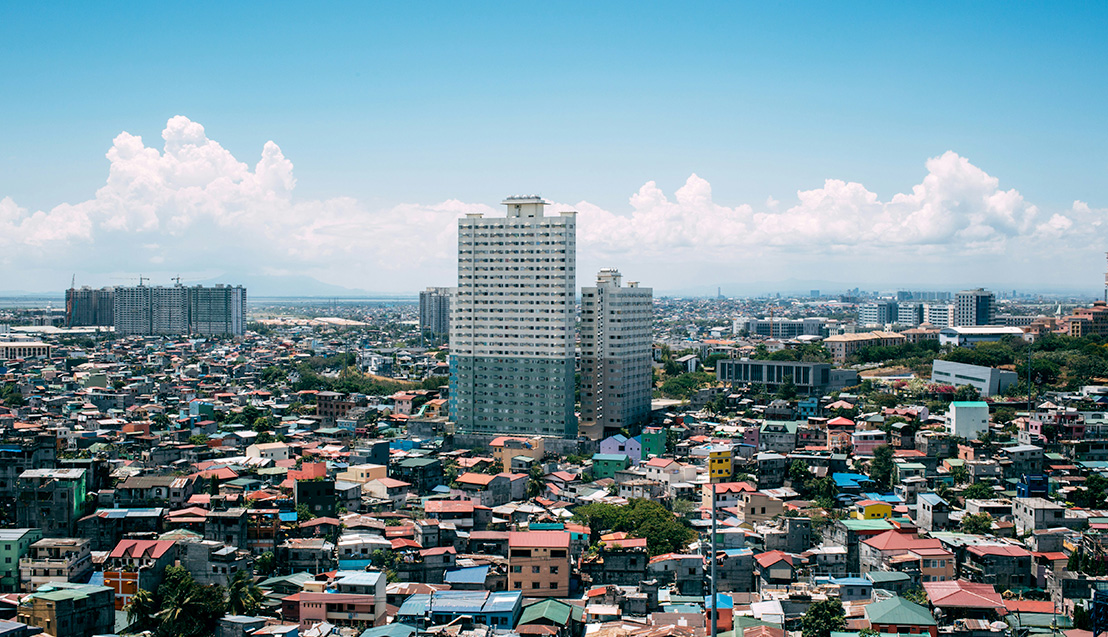 Considering hiring in the Philippines? You’re not alone. The country ranks in the top 15 countries for its labor force of 40.5 million people, which is almost 40% of the total population. With a government focused on higher education, there are plenty of skilled, English-speaking workers ready to support your business needs.
The Philippines are most well known for their fast-growing economy, especially in sectors like manufacturing, agribusiness and services. This makes it a population location for companies looking to establish a presence in the Asian markets.
Employers considering how to hire in the Philippines from another country will need to understand the local labor laws. Companies have three main options for hiring workers abroad:
- Hire directly through your own entity
- Hire through a global PEO
- Hire and pay independent contractors
Each method of hiring depends on the overall strategy and goals of your organization. We understand the complexity of international hiring process and will help you access the Filipino talent pool.
Hiring workers in the Philippines
Hiring foreign workers always starts with a business entity, which is why that option is the first on the list. But when hiring foreign workers, employers need to understand their overall business objectives and goals, timelines, and budget limitations. Having a better understanding of the Filipino market and their hiring requirements will establish a foundation for global expansion success.
1. Hire directly through your own entity
When establishing a legal entity, your business keeps full control over part- and full-time employees in the Philippines. The full registration process – including opening bank accounts, SEC registrations, and government applications – can take anywhere from 8 to 12 weeks. Depending on the type of structure and how many vendors you use to incorporate, this process can cost between $10,000-$25,000.
Although the cost and timelines deter many businesses from hiring in the Philippines, establishing a legal entity does provide greater stability and control for long-term success.
Related: 7 questions about international entity setup, answered
In addition to these operational challenges, hiring directly also means employers take responsibility for all compliance requirements. Employers hiring Filipino employees must be accountable to all local labor laws and private collective bargaining agreements (CBAs).
This is especially important in the Philippines because local labor laws favor employees over foreign businesses. That means you can’t simply dismiss underperforming employees at will, and severance and 13th-month pay are mandatory. These are just a few of the considerations when drafting employment contracts and preparing for the full scope of HR and payroll compliance. For those that don’t have the resources to support foreign employees, in-country partners can provide additional support.
Related: Guide for doing business in the Philippines
Setting up your own legal entity is a more traditional option for hiring employees in the Philippines. If you have the time and resources to manage your own foreign subsidiary, it can offer a stable foundation for long-term growth.
2. Hire through a global PEO
A professional employer organization (PEO) is a simple way to hire foreign workers without managing all the compliance requirements yourself. Global PEOs, also called employer of record (EOR), manage all administrative tasks on behalf of their clients. They offer their existing network of subsidiaries to outside companies to hire employees without all the added complexity of local regulation.
Think of a global PEO as an extended branch of your HR team. They manage everything from hiring and onboarding to risk mitigation, benefit plans, streamlined payroll, and ongoing HR support. This allows companies to quickly hire and pay employees in the Philippines while still maintaining compliance with all labor laws. The speed and security offered by global PEOs have made them a popular alternative to incorporation.
Additionally, while the PEO handles the administrative side of HR, you still have complete control over the day-to-day responsibilities and goals of the employee. This allows businesses to test new markets with the flexibility to scale operations based on data-driven results.
Partnering with a global PEO to hire in the Philippines enables businesses to establish a remote workforce quickly. This is often a necessary first step before committing to a long-term expansion strategy like entity establishment.
3. Hire and pay independent contractors
For companies that need additional support on a project or just a temporary worker while searching for a full-time employee, hiring an independent contractor might be the right solution. Over 1.5 million Filipinos – about 2% of the workforce – work as freelancers, which is the highest per capita rate in the world. They also rank 6th in the Global Gig Economy Index and is one of the fastest growing markets for international contractors. Employers hire contractors for short-term or project-based jobs as a fast and flexible hiring solution.
Related: International contractor vs. employee: Understanding the difference
Employers may enjoy the benefits of not paying taxes or benefits to these workers, but there is still risk of misclassification. Employers must have a firm grasp of the employment classifications in the Philippines before hiring a contractor. Failure to understand these requirements could result in mandatory benefits and tax back payments.
Related: Guide to paying foreign contractors
Hiring a contingent workforce in the Philippines is cost-effective as long as you avoid worker misclassification risks. Violating these employment laws will result in back pay, back taxes, civil lawsuits, and other legal penalties.
FAQs about how to hire in the Philippines
Hiring overseas can be a major challenge. If you’re planning to expand into France, here are some common questions to be aware of before you go. Understanding and complying with French employment law is necessary for success in the market.
What should be included in the employment contract?
As you consider hiring employees in the Philippines, it’s important to familiarize yourself with employment regulations to ensure compliant contracts. Here’s an overview of essential guidelines, along with how a professional employer organization (PEO) can support your HR needs.
Working Hours
Standard Workday: Eight hours, including short rest periods that count towards the total hours worked. Employees are entitled to at least a one-hour meal break.
Rest Days: Employees must have at least 24 consecutive hours of rest after six consecutive workdays. Employers can determine the rest day, but this is subject to collective bargaining agreements. Employees can request specific rest days for religious reasons.
Work on Rest Days: Employees may be required to work on their rest day during emergencies, urgent equipment repairs, heavy workload periods, potential loss of perishable goods, or when continuous operations are necessary.
Overtime: Work beyond eight hours a day is considered overtime.
Compensation
Minimum Wage: Set by each of the 17 administrative regions, with distinct rates for non-agricultural and agricultural work.
Overtime Pay: Regular wage plus 25% for overtime hours.
Night Shift Pay: Additional 10% of the regular wage for hours worked between 10 p.m. and 6 a.m. Overtime during night shifts includes the night shift premium.
Rest Day Work Pay: An extra 30% of the regular wage for working on a rest day, with higher rates if it falls on a holiday.
Holiday Pay: Employees covered under the Holiday Pay Rule receive their regular wages for holidays off, or 200% of regular wages if they work on a holiday. If the holiday falls on a rest day, they receive 230% of their regular pay. Special day work attracts 30% extra pay on weekdays and 50% extra on rest days.
Bonuses
13th-Month Bonus: Mandated by a 1976 presidential decree, this bonus must be paid by December 24 to all employees who have worked at least one month during the year.
Probationary Period
Trial Period: Can last up to six months, except for apprenticeships, which may be longer. Employers must clearly explain performance standards that must be met for full-time employment. Termination during this period can only occur for failure to meet standards or for just cause.
Termination and Severance
Just Cause and Due Process: Termination requires just cause, one month’s notice, and an explanation. Employees must have the opportunity to defend themselves. Disputes can be taken to the National Labor Relations Commission, which can order reinstatement with full back pay or compensation if hostile conditions prevent return.
Employee Resignation: Requires one month’s advance written notice. Failure to provide notice can result in liability for damages.
Severance Pay: Required for layoffs, business closures, or termination due to disease. Redundant employees receive one month’s pay per year of service. Employees terminated to prevent losses or due to business closure receive one month’s pay or half a month’s pay per year of service, whichever is higher. Employees terminated due to disease receive the same severance pay terms.
What are some benefit and leave requirements?
When negotiating employment terms with a candidate in the Philippines, it’s essential to consider statutory benefits and paid leave requirements. Here’s an overview of these benefits and how an employer of record (EOR) can support your company’s benefits strategy.
Maternity Leave
Paid Leave: Pregnant employees are entitled to 105 days of paid maternity leave and 30 days of unpaid leave. In the case of miscarriage or emergency termination, employees receive 60 days of paid leave (78 days for Cesarean delivery). Single mothers are granted an additional 15 days of paid maternity leave.
Maternity Pay: Equals 100% of the employee’s average daily salary. Employees who have made at least three monthly contributions to the Social Security system in the 12 months before childbirth will receive some or all of their maternity pay from Social Security. Employers must cover any difference between what Social Security provides and the employee’s salary.
Allocation of Leave: Up to seven days of leave can be allocated to the child’s father.
Limitations: Employees with four or more children are not eligible for additional maternity leave.
Vacation
Entitlement: Employees at businesses with 10 or more workers who have been employed for at least a year are entitled to five days of paid leave annually.
Vacation Pay: Equals the employee’s regular salary. Unused leave can be cashed in at the end of each year.
Holidays
Employees in the Philippines are entitled to the following paid holidays:
- New Year’s Day
- Maundy Thursday
- Good Friday
- Bravery Day
- Labor Day
- Independence Day
- Christmas Day
- Rizal Day
The government also announces several special holidays each year, which are unpaid and may include:
- Chinese New Year
- End of Ramadan
- Festival of Sacrifice
- Ninoy Aquino Day
- National Heroes Day
- All Saints Day
- Bonifacio Day
- Christmas Eve
- Last Day of the Year
Holidays are categorized as regular holidays or special (non-working) days. If a holiday falls on a weekend, it is typically moved to the next regular workday.
Sick Leave
Legal Requirement: Paid sick leave is not mandatory but is commonly provided through collective bargaining agreements.
Social Security Benefits: Employees without sick leave or who have exhausted it are eligible for social security benefits if they have made at least three months of contributions in the prior 12 months and are unable to work for at least four days. The sickness benefit covers approximately 90% of the average salary for up to 120 days per year.
Health Coverage
Universal Health Coverage: All Filipino citizens are covered by PhilHealth (the Philippine Health Insurance Corporation), funded by government funds and employer/employee contributions. Premiums vary by age and income. PhilHealth does not cover all medical services, leading to some out-of-pocket expenses.
Private Health Insurance: Many employers provide additional private health insurance.
Additional Benefits
Pension: Funded by government tax revenues.
Workers’ Compensation: Covered through mandated employer insurance.
Employer social costs cover a significant portion of employee benefits in the Philippines. We can advise on supplemental coverage options, such as additional pension contributions or life insurance, to enhance your benefits package.
How to hire employees in the Philippines with Global PEO Services
The Filipino market is bursting with new talent and opportunities for growth. We have the experience and expertise to help you navigate complex international employment laws to expand your workforce. Global PEO Services, a Safeguard Global company, simplifies your expansion strategy and empowers you to focus on hitting your growth objectives.
We handle all the onboarding, payroll, HR, benefits administration, taxes and compliance. No matter what your hiring needs are, we can help you quickly and cost-effectively acquire the best workers in the Philippines. Speak with one of our global business advisors today to learn more.
HR & Benefits in Philippines
Your Employees, Our HR
Get the Philippines HR support you need without setting up a legal entity or hiring HR personnel. Save time and enjoy peace of mind as our experts manage all aspects of your Philippines HR.
Philippines Recruitment Solutions
Need help finding talent? Our dedicated team of experienced recruiters can help you find and hire the employees you need, fast. We have an in-depth understanding of local job markets and provide you with access to exclusive talent networks, so you are always choosing from the best available candidates.
A solution for every staffing need:
- Contingent Hire
- Permanent Hire
- Recruitment Process Outsourcing (RPO)
Best in Class Employee Benefits
We provide high-quality benefits packages for your employees and their families. Our robust heath and benefits plans are designed to enhance local mandatory benefits while addressing employee expectations and cultural nuances.
Our employee benefits plans include:
- Top of the line health benefits (medical, dental, vision)
- Life insurance and short-term / long-term disability
- Employee assistance program – phone/online counseling & support
- Employee wellness program – health & wellness classes
- Business travel insurance
Guaranteed HR Compliance
Stay compliant without the complexity. Our experts manage the HR compliance requirements for your Philippines teams and consistently monitor changes to labor laws so you are always informed and up to date.
Payroll in Philippines
Pay Employees Without the Hassle
Pay employees in the Philippines without setting up a legal entity. Get peace of mind as we manage all aspects of your Philippines payroll, ensuring your employees are always paid accurately, on time, and in their local currency.
Cross-Border Payments & Payroll Compliance
Run compliant payroll in the Philippines no matter where your business is located. Our Philippines payroll experts get you set up fast and ensure you are always in compliance with local payroll requirements.
Struggling to Manage Payroll for Independent Contractors?
Pay your contractors easily and without the risk. Rather than taking on the liabilities associated with employing an independent contractor, we allow you to hire them as employees through our Philippines PEO. They continue to work for you, while we manage all aspects of payroll, HR, and compliance.
The Solution to Low Headcount Payroll
Eliminate complexity and reduce the cost associated with running payroll for just a few employees. With Global PEO Services, you gain full access to our pre-existing Philippines payroll infrastructure, teams, and processes. Stay flexible, save time, all while getting the payroll services and support you need.
Payroll & PEO in Philippines
Philippines Payroll Outsourcing & Management Services
Hire and pay employees in Philippines without setting up a legal entity. With our Philippines payroll and PEO services, you select the candidate, and we handle the rest.
After successfully hiring and onboarding your employees, we manage all aspects of the payroll process, ensuring your employees are always paid accurately and on time.
Our Philippines payroll experts have an in-depth understanding of local payroll requirements and provide you with in-depth guidance and compliance support.
Our Philippines PEO Payroll Solutions Cover:
Struggling to Manage Payroll for Independent Contractors?
Global PEO Services eliminates the complexity and liabilities associated with employing and paying independent contractors. We allow you to hire your contractors as employees through our Philippines PEO. The individual continues to work for you, while we manage all aspects of payroll, HR, tax, and compliance.
The Solution to Low Headcount Payroll
Finding a payroll option for countries where you have low headcounts can be a challenge. Global PEO Services provides the solution. By using our Philippines PEO to manage your payroll, you leverage our pre-existing payroll infrastructure, teams, and processes, even if you only need payroll for just one employee. Stay flexible, save time, all while getting the payroll services and support you need.